Self-Supervised Learning for Image APIs: A Practical Guide
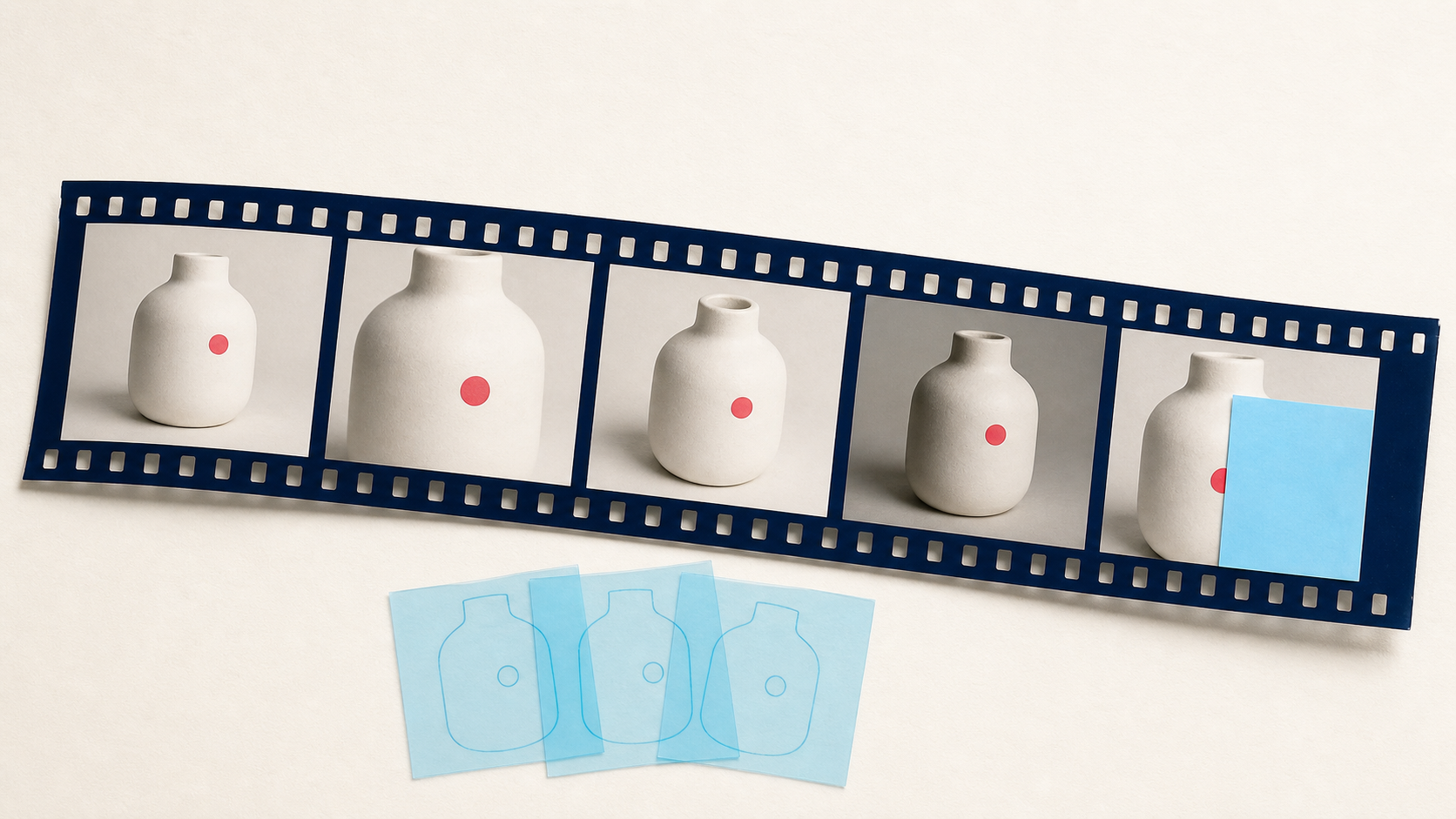
Image models usually need two things before they can perform a useful task: a way to represent what is in an image and examples that connect those representations to a desired output. Traditional supervised learning builds both from labeled datasets. Self-supervised learning changes the first step. It lets a model learn visual structure from images that do not carry human-written class labels, masks, or annotations.
For teams using image APIs, this matters even if they never train a model themselves. The training approach can affect how well a model transfers to new visual domains, how much task-specific data is needed, and how quickly a provider can adapt a system. It does not remove the need for fine-tuning, evaluation, or quality control. Understanding that distinction makes it easier to assess claims about self-supervised computer vision.
Why labeled image data becomes a bottleneck
A supervised dataset connects each input to a human-defined answer. An image classifier may need a category for every photo. A segmentation model may need a pixel-level mask. A restoration system may need aligned examples of damaged and clean images. Producing those labels takes time, and the work becomes harder when the visual domain is technical, private, or unusually varied.
Labels also encode a particular task. A dataset prepared for product classification does not automatically teach a model to find object boundaries or compare image similarity. When the task changes, the labeling process often starts again. This creates friction for API providers that need to support many image types, from clean studio packshots to scanned documents and user-generated photos.
Self-supervised pretraining uses the images themselves as the source of a learning signal. That makes a much larger pool of raw visual data useful during the representation-learning stage. A smaller, carefully labeled dataset can then be reserved for adapting and testing the model on a specific task.
How self-supervised vision models learn
Self-supervised methods define a training problem whose answer can be derived from the input. The model is not given a product category or a foreground mask. Instead, it solves a pretext task that rewards it for capturing useful visual relationships.
Contrastive learning
Two transformed views of an image are treated as a related pair. The model practices keeping important content similar despite crops, color changes, or other augmentations.
Masked image modeling
Part of an image is hidden before it reaches the model. The model learns to reconstruct missing information from the visible context.
Self-distillation
A student network learns from stable targets produced by another version of the model. The objective encourages consistent visual features without category labels.
These methods do not all produce the same representation. The choice of image collection, augmentation, objective, architecture, and training scale still matters. SimCLR demonstrated how strongly contrastive learning depends on the composition of image augmentations. Masked Autoencoders showed that reconstructing heavily masked image patches can scale effectively with Vision Transformers. DINOv2 combined self-supervised techniques with a curated data pipeline to train general-purpose visual features.
From pretraining to an image API
Self-supervision is an upstream training strategy, not a special API request mode. A production endpoint still needs a defined input, output, error model, and service contract. The path from raw images to an API normally includes several distinct stages:
- Build a suitable image collection. The data should cover the variation the model is expected to understand. More images do not compensate for a collection that excludes important domains or contains problematic duplicates.
- Pretrain a visual encoder. A self-supervised objective teaches the encoder to represent structure, similarity, and context without task labels.
- Adapt the model to a task. Fine-tuning, a lightweight prediction head, or another adaptation method connects the representation to background removal, restoration, visual search, or a different output.
- Evaluate on task-specific data. A general representation is only a starting point. The adapted model must be tested on examples that match the intended workload, including difficult and uncommon inputs.
- Package the result as a service. Preprocessing, inference, postprocessing, limits, monitoring, and versioning turn the model into an API that applications can depend on.
This separation is useful when comparing model research with API behavior. A paper may show that a representation transfers well across benchmark tasks. An API team still has to determine how that representation behaves inside a complete processing pipeline.
What self-supervised pretraining can change
The clearest benefit is reuse. A broadly trained visual encoder can provide a common starting point for several downstream tasks. That can reduce the amount of task-specific labeling needed during early development and make experiments easier to run across adjacent use cases.
It can also help with domain adaptation. An organization may have many unlabeled images from its own workflow but only a small labeled sample. Pretraining or continued pretraining on the unlabeled collection can expose the model to the domain's lighting, composition, textures, and capture conditions before task-specific adaptation begins.
These advantages are not automatic. The pretraining data can carry bias, irrelevant repetition, or privacy concerns. A poorly chosen augmentation can remove details that matter to the downstream task. Training a large foundation model also requires substantial compute, so many API providers build on existing pretrained encoders instead of starting from zero.
What self-supervised learning does not mean
The phrase "unlabeled data" is easy to overread. It does not mean that labels disappear from the full development process. Task definitions, evaluation sets, safety checks, and production monitoring still need human judgment. Fine-grained jobs such as segmentation may continue to require precise annotations during adaptation.
It also does not guarantee lower inference cost. Pretraining strategy and serving efficiency are separate questions. Model size, input resolution, batching, hardware, and postprocessing all influence latency and cost. The discussion of Vision Transformers and image API costs explains why architecture and serving choices must be evaluated together.
Finally, a general visual representation is not proof of production quality. A model can perform well on public benchmarks and still fail on transparent products, reflective surfaces, compressed marketplace photos, or unusual document layouts. The test set needs to represent the inputs that the API will actually receive.
How to evaluate an image API built on modern vision models
API buyers rarely need to select the provider's exact pretraining objective. They do need evidence that the complete service works for their workload. Start with a representative evaluation set and keep it separate from examples used to tune prompts or parameters. Include common inputs, edge cases, and files that previously caused failures.
Measure the output that matters to the application. For background removal, inspect edge quality around hair, translucent objects, and shadows. For restoration, check that the process repairs damage without inventing important details. For image search, evaluate retrieval quality on the catalog's real categories and visual similarities.
Then test the operational layer. Record latency, failure responses, retry behavior, payload limits, and throughput under realistic concurrency. The guide to scaling high-volume image processing pipelines covers the service-level concerns that sit around model inference. If an application may switch between providers or tasks, unified image API gateways can help separate workflow design from a single model integration.
Using modern vision models through Deep-Image.ai
A hosted image API lets an application consume a task-specific result without operating the training and serving stack. The Deep-Image.ai API documentation describes the available integration flow and request structure. Developers can begin with a concrete workflow such as the Remove Background API or the documented process for creating a product photo, then evaluate the output against their own images.
The practical lesson is simple: self-supervised learning expands what can be learned before detailed task labels are available, but the final endpoint still depends on careful adaptation, evaluation, and service engineering. For an API user, the best question is not only how the base model was trained. It is how reliably the complete system handles the images, constraints, and scale of the real application.
